


Imagine a summer day with the sun shining brightly, and you’re enjoying the outdoors. Did you know that our sunny days come with a hidden danger?
Skin cancer is one of the most common cancers in the world, but it’s also one of the most treatable if caught early. With more and more people getting sun exposure in places like South Africa, it’s crucial to know the warning signs and get regular skin checks to stay healthy.
At SCINMed we focus on finding skin cancer, preventing it and giving personalised care to get the best results.
WHAT IS SKIN CANCER?
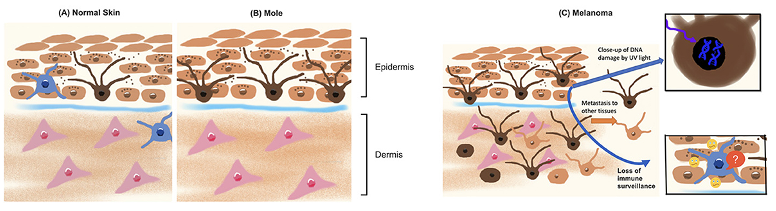
Basically, skin cancer happens when the body’s natural process of renewing skin cells goes wrong. When our skin gets too much sun, it can damage the cells and make them grow too quickly. This can lead to growths that might be harmless or cancerous.
The common types of skin cancer are:
- Basal Cell Carcinoma (BCC): the most common type and least aggressive
- Squamous Cell Carcinoma (SCC): can grow deeper into the skin if not treated
- Melanoma: the serious type that can spread quickly
Skin cancer is one of the most preventable cancers, and catching it early makes treatment much more successful.
HOW EARLY DETECTION WORKS
If skin cancer is found early, it can be treated quickly and effectively.
If it’s not caught early, it can get worse and be harder to treat.
Checking your skin regularly both at home and with a doctor is key to finding problems
SIGNS & SYMPTOMS
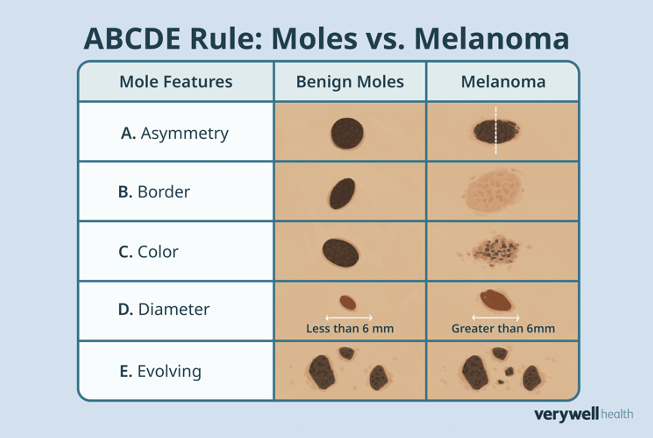
Here’s a way to check moles:
- A – Asymmetry: One half does not match the other
- B – Border: Irregular, jagged, or blurred edges
- C – Colour: Uneven or multiple shades
- D – Diameter: Larger than 6mm or increasing in size
- E – Evolving: Any change in size, shape, or colour
Also, watch out for new growths, like bumps or rough patches and sores that don’t heal. If you feel itching or pain around a growth, get it checked by a doctor.
RISK FACTORS FOR SKIN CANCER
Most skin cancers are caused by too much sun exposure. Some things that can increase your risk are:
- Much sun or tanning bed use
- Skin that burns easily
- A history of sunburns
- Family or personal history of skin cancer
- Many moles
- A weak immune system
Understanding your risk helps you take steps to prevent skin cancer.
PREVENTION & SKIN HEALTH TIPS
Protecting your skin every day can lower your risk:
- Avoid the sun
- Use sunscreen
- Wear protective clothes and sunglasses
- Get regular skin checks
Checking your skin yourself is important. Look at your torso, arms, legs and to-see areas.
SEE A PROFESSIONAL WHEN
You should get a skin check if you:
- Notice changing moles
- Have a growth that doesn’t heal
- Feel itching, bleeding or sensitivity
FINAL THOUGHTS
Skin cancer is treatable if caught early. You need to be aware.
By knowing the signs and taking care of your skin you can protect your health.
Early detection can save your life.
Be proactive about your skin health.